2017年7月16日 星期日

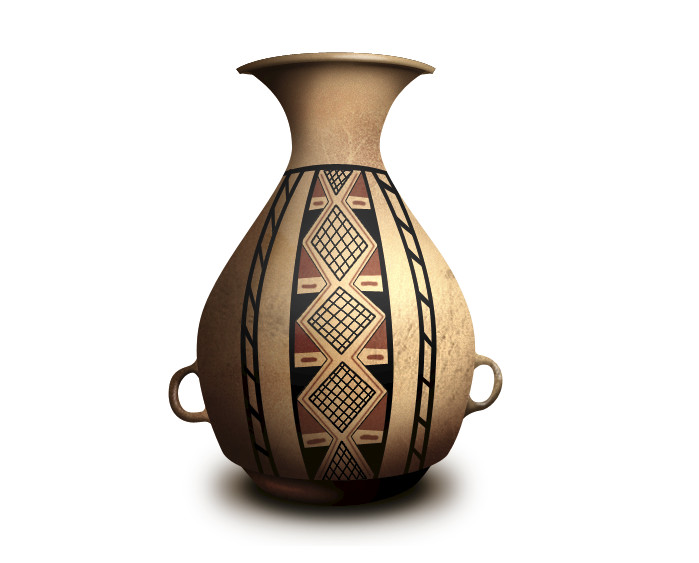
Pottery / 陶器

Pottery is one of the oldest human inventions, originating before the Neolithic period.Pottery is made by forming a clay body into objects of a required shape and heating them to high temperatures in a kiln which removes all the water from the clay. In ancient times, pottery is a kind of daily necessities. In modern times, it also can be a collection of handicrafts.

陶器是人類的最古老發明之一,在新石器時代就已初見簡單粗糙的陶器。它是用黏土或陶土經捏製成形後高溫燒制而成的器具。在古代陶器是一種生活用品,在現代既能是生活用品又可作為工藝品收藏。


2017年6月22日 星期四

Ceramics / 陶瓷

Ceramics, also called china. The Chinese invented pottery as early as about 8000-2000 (Neolithic Age). Pottery is made from clay, and porcelain is made from porcelain clay. Ceramics are the general term for pottery and porcelain. All goods are made from these two raw materials, through the process included ingredients, molding, drying, roasting then can be called ceramics.

陶瓷,英语:Ceramics 或china。中国人早在约公元前8000-2000年(新石器时代)就发明了陶器。用陶土烧制的器皿叫陶器,用瓷土烧制的器皿叫瓷器。陶瓷则是陶器和瓷器的总称。凡是用陶土和瓷土这两种不同性质的粘土为原料,经过配料、成型、干燥、焙烧等工艺流程制成的器物都可以叫陶瓷。


porcelain
瓷器

Pottery
陶器


2017年5月30日 星期二

Duanwu Festival(Dragon Boat Festival) / 端午節

The Duanwu Festival, also often known, especially in the West, as the Dragon Boat Festival, is a traditional holiday originating in China, occurring near the summer solstice. The festival now occurs on the 5th day of the 5th month of the traditional Chinese calendar, which is the source of the festival's alternative name, the Double Fifth Festival.
Two of the most widespread activities conducted during the Duanwu Festival are racing dragon boats , preparing & eating zongzi (Rice Dumplings).

端午節,在西方國家也知道這個節日(國際間英文通稱為龍舟節),是一個源於中國的傳統節日,時間與夏至接近。 節日現在定於中國農歷五月的第五天,這是另一名稱五五節的起源。
賽龍舟和包粽子吃粽子是在端午節最廣泛進行的兩項節日活動。


2017年5月29日 星期一

Zongzi (Rice Dumplings) - the food of Dragon Boat Festival / 粽子 - 端午節必吃食品


Zongzi (Rice Dumplings) were a traditional Chinese food in Dragon Boat Festival. On the eve of the Dragon Boat Festival, every household will soaked glutinous rice, washed bamboo leaves and package Zongzi (Rice Dumplings). Rice Dumplings made of glutinous rice stuffed with different fillings and wrapped in bamboo leaves, reed, or flat leaves. Rice Dumplings were cooked in boiling water or steaming.
The varieties, shape and fillings of Rice Dumplings were depending on different eating habitat and taste all around the world. The most common and popular Rice Dumplings were “Cantonese Rice Dumplings”, “Nyonya Rice Dumplings”, “Jiaxing, Zhejiang Rice Dumplings” , “Beijing Rice Dumplings”and “NingBo, Zhejiang Rice Dumplings”.
“Cantonese Rice Dumplings”
Cantonese Rice Dumplings also named Cantonese Sticky Rice Dumpling. It’s mainly made of glutinous rice, stuffed with seasoned pork belly, salted duck egg yolks, mushroom, and many different fillings, then wrapped in bamboo leaves, cooked in boiling water or steaming.
“Nyonya Rice Dumplings”
“Nyonya Rice Dumplings” were made similarly to Southern Rice Dumplings. However, the filling was typically minced pork with sweet white gourd, ground roasted peanuts, and a spice mix.
“Jiaxing, Zhejiang Rice Dumplings”
"Jiaxing, Zhejiang Rice Dumplings" were the most popular Rice Dumpling in Jiangnan. It’s mainly made of pork but also can be mung beans, red beans or salted duck egg yolks. It also had vegetarian rice dumplings.
“Beijing Rice Dumplings”and “NingBo, Zhejiang Rice Dumplings”
“Beijing Rice Dumplings” and “NingBo, Zhejiang Rice Dumplings” were the representative of “Pure Glutinous Rice Dumplings. The main ingredient was glutinous rice. The colour of Pure Glutinous Rice Dumplings of “Beijing Rice Dumplings” were white. The colour of Pure Glutinous Rice Dumplings of “NingBo, Zhejiang Rice Dumplings” were yellow as it added some alkaline water into glutinous rice. Rice Dumplings became pale yellow after cooked. We also called “Yellow-Alkaline Rice Dumplings”. People taste it with dipped in sugar or light syrup. it tastes delicate and delicious.

粽子是端午節的傳統食品。每到端午節前夕,家家戶戶都會浸糯米、洗粽葉和包粽子。它是一種由糯米製成的傳統中國菜,餡滿了不同的餡料,包裹竹子,蘆葦或平葉。粽子是在沸水中煮熟或蒸熟。
粽子的品種、形狀和餡類亦按各地的飲食習慣和口味而有所不同。最常見的粽子有廣東粽子、北京粽子、娘惹粽子、浙江嘉興粽子和浙江寧波粽子。
“廣東粽子”
廣東粽子又名廣東鹼肉粽子。它主要由糯米製成並填滿各式各樣的餡料,豬腩肉,咸鴨蛋黃,冬茹和許多不同的餡料,然後裹在竹葉上,在沸水中煮熟或蒸熟。
“娘惹粽子”
“娘惹粽子”的製作方式跟南方粽子很相近。然而,餡料通常是用豬肉末、糖冬瓜、磨碎的花生碎和香料混合物。
“浙江嘉興粽子”
“浙江嘉興粽子”是江南最受歡迎的粽子。它的餡料通常是豬肉,也可以是綠豆、紅豆和咸鴨蛋黃。“浙江嘉興粽子”還有齋粽子。
“北京粽子” 和 ”浙江寧波粽子”
“北京粽子” 和“浙江寧波粽子”是純糯米粽子的代表。粽子的主要成分是糯米。用純糯米製成的北京粽子是白色的。用純糯米製成的浙江寧波粽子是黃色的,原因是在糯米中加入適量的鹼水,煮熟後糯米變成淺黃色。吃時會蘸糖或淡糖漿來品嘗它。味道細膩美味。


Cantonese Rice Dumplings
廣東粽子

Nyonya Rice Dumplings
娘惹粽子


Jiaxing, Zhejiang Rice Dumplings
浙江嘉興粽子
Beijing Rice Dumplings
北京粽子

NingBo, Zhejiang Rice Dumplings
浙江寧波粽子


2017年5月26日 星期五

The Lantern Festival – the another style Valentine’s Day of Chinese / 元宵節 – 華人不一樣的情人節

The Lantern Festival is a Chinese festival celebrated on the fifteenth day of the first month in the lunisolar Chinese calendar. This day is the first full moon day of the Lunar New Year marks the arrival of spring, Chinese people will eat Yuanxiao, enjoy exhibit of lanterns , solve riddles written on lanterns for the traditional celebration. During the Lantern Festival, the youngs (a boy & girl usually) will take the opportunity to get meet and date in the exhibit, so we also call this day is “China Valentine's Day”. 

華人元宵節活動有悠久歷史,時間是每年的農曆正月十五。這天是農曆新年的第一個月圓之夜,象徵著春天的到來,華人傳統會吃元宵、賞花燈、猜燈謎,以示祝賀。青年男女外出觀燈並趁機結識、相會,所以也有「中國情人節」的別稱。

Representative of food of The Lantern Festival : Yuanxiao
元宵節的代表性食物 : 元宵


the another style Valentine’s Day of Chinese
元宵節 – 華人不一樣的情人節

新增說明文字

2017年5月13日 星期六

Red envelope (Red pocket) / 紅包

A red envelope / red packet is a small gift made of money in a red envelope. In Chinese and other East Asian and Southeast Asian societies, a red envelope is a monetary gift which is given during Chinese New Year or special occasions such as weddings, graduation or the birth of a baby.


紅包是將金錢放置紅色封套內做成的一種小禮物。在中國和其他東亞、東南亞社會,紅包是在新年期間或特殊場合如婚禮、畢業或嬰兒生辰等致送金錢作為禮物時都會使用。


2017年5月11日 星期四

Fai Chun (Spring Festival couplet) / 揮春 (春聯)

Fai Chun is a traditional decoration that is frequently used during Chinese New Year and Beginning of Spring. It is written with beautiful Chinese calligraphy on red color paper-cuts or couplets with popular themes of "good fortune", "happiness", "wealth", and "longevity". It will be decorated on the wall and door generally.
Fai Chun is written by hand but owe to convenience, printed versions are mass-produced nowadays. Not only does it exist in China, but also in Korea, Japan and Vietnam.


揮春是一種在新春和立春時使用的傳統裝飾物,把賀年的吉利字詞用漂亮的書法寫在紙上或對聯而成,通常以“好運”、“幸福” 、“財富” 、“長壽”為主題。一般是貼在牆、門之上。
為更方便使用,以前手寫的揮春現今也很常以印刷方式批量生產。除了中國,遠在韓國、日本和越南也有使用。


They are made with Chinese Calligraphy by hand in tradition
傳統的是以手寫書法而成


A word is mixed by 4 Chinese word, the meaning is to bring in wealth and treasure to you
由招財進寶4個中文字合拼而成的一組字

the meaning:
left - have a most happy and prosperous New Year.
right - be blessed with peace and safety in all four seasons.


2017年5月10日 星期三

Chinese New Year / 中國新年

In traditional culture, Chinese New Year refers to the Spring Festival (also known as the Lunar New Year), the Lunar calendar New Year's Day, is the traditional new year of the Han nationality of the world. In fact, the beginning of a year was specified the 24 solar terms in the beginning of spring in ancient China, but it change to the first day of Lunar calendar after Xinhai Revolution. From the Ming Dynasty, the Chinese New Year festivals will be end on the fifteenth day (the Lantern Festival) of the first Lunar month, but some people will celebrate Chinese New Year during the whole first Lunar month, which is depend on the culture of different cities.

Chinese New Year is considered a major holiday for the Chinese and has had influence on the lunar new year celebrations of its geographic neighbours.

Within China, regional customs and traditions concerning the celebration of the Chinese New Year vary widely. Often, the evening preceding Chinese New Year's Day is an occasion for Chinese families to gather for the annual reunion dinner. It is also traditional for every family to thoroughly cleanse the house, in order to sweep away any ill-fortune and to make way for good incoming luck. Windows, doors and walls will be decorated with red color paper-cuts and couplets with popular themes of "good fortune", "happiness", "wealth", and "longevity". Other activities include lighting firecrackers and giving money in red envelopes. Among about one third of the Mainland population, or 500 million Northerners, dumplings (especially those of vegetarian fillings) feature prominently in the meals celebrating the festival.


文化習俗中的中國新年是指春節(又稱農曆新年),即華夏傳統曆法農曆的元旦,是全世界各地漢族社會的傳統新年。中國古時曾專指二十四節氣中的立春,是一年的開始,辛亥革命後改為農曆正月初一開始為歲首。從明代開始,春節節慶一般到正月十五日(即元宵節)之後才正式結束,有些地方的新年慶祝活動甚至到整個正月結束為止。

中國新年被認為是中國最主要的節日,慶祝節日的期間對鄰近國家也存有影響力。

在中國,地方習俗和傳統對於慶祝新年會存有不同的差異。 通常,新年前一晚(除夕夜)中國家庭都會一家人團聚在一起吃團年飯。 傳統上每個家庭也會徹底清洗房子,以掃除任何不幸,並招來好運。 窗、門、牆都將貼上寓意“好運”、“幸福” 、“財富” 、“長壽”的揮春和對聯。 其他慶祝活動包括點鞭炮和派發紅包。 在大約三分之一的內地人口,或五億名北方人中,餃子(特別是素食餡料)是節日慶祝的主要食物。


Mid-Autumn Festival / 中秋節

The Mid-Autumn Festival is held on the 15th day of the 8th month of the lunar calendar with full moon at night. It's said the moon is th...